Shows · Carnival in Flanders “A Musical Comedy”
Carnival in Flanders “A Musical Comedy”
Opened 1953
6 performances
Musical, Golden Age
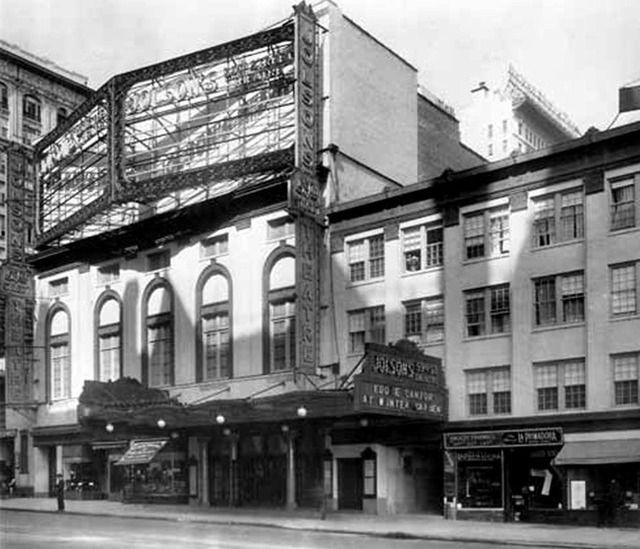
The sly story looked at the Spanish invasion of the small Flanders village of Flacksenburg. But it’s a curious “invasion” because the village’s four soldiers head for the hills and the mayor (Roy Roberts) plays dead, thus leaving his “widow” Cornelia (Dolores Gray) and the womenfolk to face the invaders, who are led by the dashing Duke (John Raitt). Cornelia is more than happy to deal with the Duke, and the two spend a romantic night together. Ultimately, the Spanish leave the town untouched, the soldiers return, the mayor comes back from the dead, and he and Cornelia resume their marriage (which she praises as a “fine old institution”). Skimming around the periphery of the plot were the young lovers Siska (Pat Stanley) and Jan Brueghel (Kevin Scott), the latter an aspiring painter who hopes to follow in dear old dad’s footsteps (Oliver Smith’s scenic designs sometimes paid tribute to Pieter Brueghel [who later altered his last name to Bruegel]). The book needed a light and sophisticated touch to depict the tongue-in-cheek goings-on, but instead the proceedings were labored and heavy-handed. Further, the characters were off balance. John Raitt made his first entrance a full hour into the show, and William Hawkins in the New York World-Telegram and Sun noted that each time the writers hit a creative road block their solution was to bring Dolores Gray back on stage for another song (not that anyone really complained, for her clarion and brassy show-business voice was one of the glories of Broadway). Hawkins said the evening soon began to “resemble a concert by Dolores Gray,” and he wasn’t far from wrong: of the sixteen separate musical sequences (including reprises and production numbers), she sang six solos, two duets, and participated in two others. As mentioned, the secondary lovers were given short shrift; after an early first-act duet, they seem to have completely disappeared until the musical’s final scenes. John McClain in the New York Journal-American said the musical laid a “large leaden egg” and wondered how the potentially promising story could have been so “stifled by a dreary and purposeless book”; Richard Watts in the New York Post bemoaned the “ponderous narrative”; John Chapman in the Daily News said the plot was “difficult” to follow; and Hawkins found the “confusing” book “just plain boring” and noted the script was a “review of the most familiar jokes ever told.” But there were pleasures to be found in the evening. Robert Coleman in the Daily Mirror praised the “thrilling” ballet “The Plundering of the Town,” in which the mayor wrongly predicts what will happen when the Spanish arrive; Hawkins said the dance sequence was exciting, “brutal and violent”; and Walter Kerr in the New York Herald Tribune said it was “shatteringly vigorous” and lead dancer Matt Mattox was “striking.” Kerr also liked the “Spanish Trio” of Mattox, George Martin, and Jimmy Alex, all of whom brought “fire” to “The Carnival Ballet.” Brooks Atkinson in the New York Times suggested some of the choreography was rather too “modernistic” and seemed “strange and irrelevant” in the proceedings, but he praised Mattox, who was “lean, sharp, austere, satanic and swell.” And he again brought up the O-word, noting the evening was “as roguish about romance as third-rate operetta used to be.” As for Dolores Gray, Atkinson said the “professional trouper” had an “old-fashioned interest in singing lyrics clearly,” and suggested she be given either a “noble decoration” (she was: the Tony Award for Best Leading Actress in a Musical) or a real part in a real show (unfortunately, she never created a major leading role in a hit musical). Kerr said she was “remarkable” in her ability to release “enormous vocal power” with “an absolute minimum of apparent effort,” and noted she stopped the show with “Here’s That Rainy Day.” Watts said few in musical theatre could put over a song so “thrillingly,” and remarked that her projection allowed the audience to hear and understand every word of her songs; Chapman too praised her way with a lyric (she “emphasizes every syllable of a lyric as clearly as she emphasizes every turn of a classy chassis”); Coleman noted her “wonderful voice” was used “effortlessly with unerring skill and telling effect”; Hawkins described her “How Far Can a Lady Go?” as a “one-woman cantata” which was similar to co-star Raitt’s “Soliloquy” in Carousel; and McClain praised the “superb” “Here’s That Rainy Day,” which was a “hunk of a ballad she can eat on the rest of her life, show or no show,” and said “nobody but Ethel Merman can sing a song with more authority.” During the musical’s long and painful tryout, George Oppenheimer and Herbert Fields were the authors of the book, which was later credited to Preston Sturges, who also took over the direction from Bretaigne Windust. Elie Siegmeister was credited for both the dance music and the vocal arrangements, but by the time the musical reached Broadway he had lost the dan
- Music
- James (Jimmy) Van Heusen
- Lyrics
- Johnny Burke
- Book
- Preston Sturges
Productions1 on Broadway
Songs16 songs
Ring the Bell, The Very Necessary You, It’s a Fine Old Institution, I’m One of Your Admirers, The Plundering of the Town, The Stronger Sex, The Sudden Thrill, It’s an Old Spanish Custom, A Seventeen Gun Salute, You’re Dead!, (Here’s That) Rainy Day, (You Can) Take the Word of a Gentleman, The Carnival Ballet, (For) A Moment of Your Love, How Far Can a Lady Go?, Here’s That Rainy Day,
Something wrong here? Correct a field or report the problem. Every change is recorded in public under the contributor licence.