Shows · Happy as Larry
Happy as Larry
Opened 1950
3 performances
Musical, Golden Age
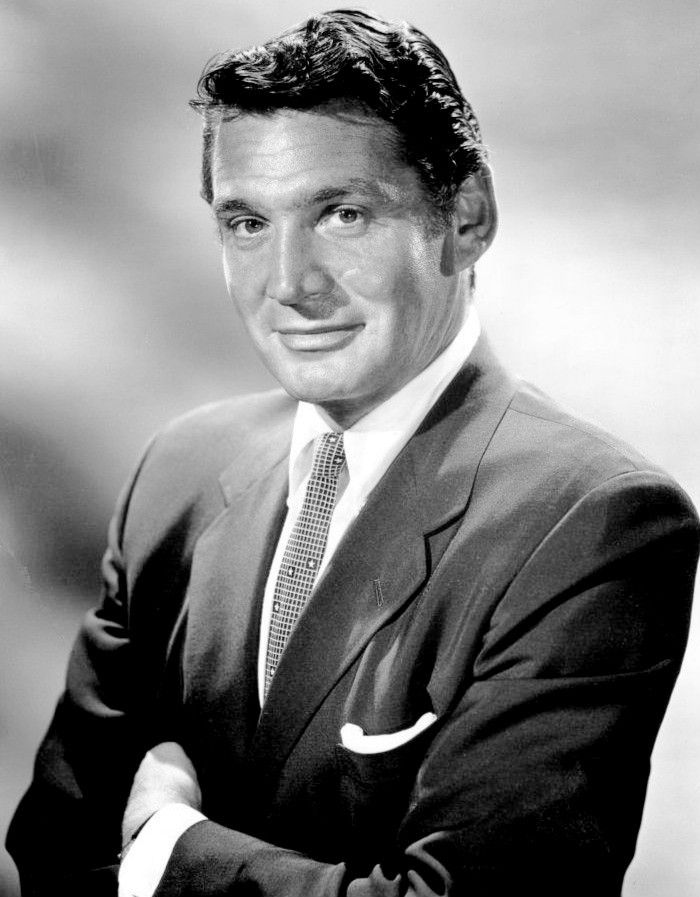
Donagh MacDonagh’s Happy as Larry began life as an unproduced verse play that was published in 1946, and was later staged at the Abbey Theatre in Dublin and then in London for almost a year’s run. One critic, who was unimpressed with the whimsical and overly complicated plot, suggested the script might best serve as the libretto for a musical. And that’s what happened in 1950, when the musical version opened on Broadway with dialogue (still in verse) and lyrics by MacDonagh and music by Mischa and Wesley Portnoff. Happy as Larry was clearly a labor of love for Burgess Meredith, who gave a number of backers’ auditions in order to raise capital for the musical, and who starred in (and directed) the short-lived Broadway production. For the auditions, Meredith performed all the roles, and reportedly his one-man presentation was more entertaining than the fully staged version seen on Broadway. The musical had two distinctions: it was the first to open on Broadway in the 1950s, and along with Portofino was the decade’s shortest-running musical, chalking up just three performances. It’s also one of a handful of the decade’s musicals (including Portofino) for which it appears no commercial recordings were made. The twee plot dealt with a group of tailors, one of whom (Larry, played by Meredith) relates the story of his grandfather (also named Larry, and also performed by Meredith), who had two wives and couldn’t determine which, if either, was good or bad. Three witches send the tailors back in time, and young Larry suddenly finds himself transformed into his own grandfather. He also finds himself dead, poisoned by a doctor (Gene Barry) who’s having an affair with Larry’s wife (Barbara Perry). The doctor is soon poisoned by the tailors, the poisoned but not-yet-dead Larry is stabbed to death by his wife (who wants his blood for a transfusion in order to resurrect the doctor), Larry comes back to life, the wife dies of shock when she sees him, and Larry promptly meets a young widow (Marguerite Piazza), who has promised her late husband she’ll not remarry until the sod above him is dry (and so she furiously fans the ground as she sets her sights on Larry). But perhaps the above isn’t a precise description of what happened on the Coronet’s stage. The critics weren’t completely confident they understood the details of the plot. Robert Garland in the New York Journal-American admitted he “couldn’t be sure” of what actually transpired; Howard Barnes in the New York Herald Tribune found the proceedings “disorderly” and “elusive”; Robert Coleman in the Daily Mirror found the evening “confusing”; and Brooks Atkinson in the New York Times tried to relate the story to his readers “as nearly as [he could] without consulting a medium.” John Chapman in the Daily News said fantasy was a “powerful drug” that “properly administered” could induce “extreme happiness.” But Happy as Larry was an “overdose.” One leprechaun (in Finian’s Rainbow) or one invisible rabbit (in Harvey) were dandy, but too much fantasy made him nervous. As for the score, the critics agreed that two ballads, Piazza’s “October” and Meredith’s “I Remember Her,” were the standouts, along with Perry’s song and dance “The Loyalist Wife.” William Hawkins in the New York World-Telegram said the score of the “surrealist fantasy” was “a strange combination of modern and trite,” with sometimes “provocative” orchestrations and sometimes ones that evoked Prokofiev as well as “an accordion, kazoo and kitchen spoons.” Chapman found the music “everything but Hibernian,” with blues and boogie-woogie in addition to a “violently and grimly modern” sound. Garland said the score was “unusual”; Richard Watts in the New York Post found it “undistinguished”; Atkinson said a few of the songs were “charming”; and Coleman wrongly predicted that two songs in the “tuneful” score would make the Hit Parade. The musical’s costumes and scenery were by Motley, but the scenic design also included original mobiles by Alexander Calder. The program noted that when producer Leonard Sillman first heard Meredith read the script of Happy as Larry, he was in the midst of preparing New Faces of 1950. The revue never happened, and the unhappy Larry shuttered after three performances, but Sillman was lucky with his next project, New Faces of 1952. Sillman was unlucky with fantasies. He had earlier produced If the Shoe Fits (1946), a modern take on the Cinderella story that played for just twenty-one performances. At least three performers in the musical later found themselves in other fantasy-musicals, all failures. Irwin Corey, who played the role of a pharmacist (who unwittingly prescribes the poison that the doctor administers to Larry), was later in Flahooley; Barbara Perry appeared in Rumple (and had earlier appeared in If the Shoe Fits); and in 1961 Meredith appeared as Mr. Kicks, the devil himself, in Kicks & Co., which closed in Chicago after four tryout performances. On April 5, 1961, a
"a play,": the show's own period marketing line.
- Music
- Mischa and Wesley Portnoff
- Lyrics
- Donagh MacDonagh
- Book
- Donagh MacDonagh
Productions1 on Broadway
Songs21 songs
No One Loves Me, Without a Stitch, Now and Then, October, Mrs. Larry, Tell Me This, A Cup of Tea, He’s with My Johnny, And So He Died, Three Old Ladies from Hades, Dance of the Fates, It’s Pleasant and Delightful, The Dirty Dog, The Flatulent Ballad, The Loyalist Wife, Oh, Mrs. Larry, Give the Doctor the Best in the House, The Doctor’s Dance, Double Murder, Double Death, He’s a Bold Rogue, I Remember Her, The Tobacco Blues
Something wrong here? Correct a field or report the problem. Every change is recorded in public under the contributor licence.