Shows · Hit the Trail
Hit the Trail
Opened 1954
4 performances
Musical, Golden Age
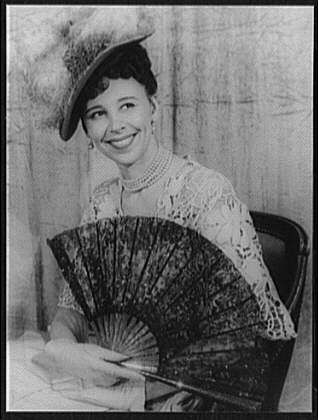
The plot dealt with a down-and-out opera company that becomes stranded in Virginia City, Nevada, in the late 1890s. Somehow, the opera’s diva (Irra Petina) ends up running a beauty emporium, and soon finds she must decide on a husband, the town’s dull but dependable banker (Robert Wright) or the fascinating but flighty opera company manager (Paul Valentine) (in noting the heroine’s either-or dilemma, John Chapman in Theatre ’55 wrote that “the prima donna doesn’t know whether to marry a banker or a gambler. Well . . . who ever did?”). Brooks Atkinson in the New York Times reported the cast played their hearts out as if they were in South Pacific or Kiss Me, Kate, and like many of the critics he praised “Nevada Hoe-Down,” a “lively dance tune” that brought down the first-act curtain. He also noted that set designer Leo Kerz created “one of the top scene-designing jobs of the season” with his “ingenious use” of “original” scenery that employed silhouette effects as well as slats that slid across the stage. And because operettas were always an anathema to Atkinson, he noted Hit the Trail followed the tried-and-true operetta formula and thus “in book and score” was “decorous but insipid” in a manner that would “probably” have been acceptable in earlier years. Noting that the book was “sad and pathetic” and little more than a “thin string for song cues,” John Chapman in the Daily News said the musical missed the “flavor and authenticity” of Paint Your Wagon and could easily have taken place in the Miami Beach of 1955; Robert Coleman in the Daily Mirror said the Thanksgiving turkey was a week late coming to town, noted the book was “primitive” and the music “mediocre” (and the lyricist must “blame only herself”), and mentioned that one character uttered his own review of the show with his line, “This is a disaster!”; and William Hawkins in the New York World-Telegram and Sun remarked that the musical was in the “dough stage” since it was “half-baked” and “not even kneaded”; but he praised Irra Petina, who tried to make something out of the “all echo” music and attempted to inject a “crisp” edge to comedy that was in truth as “limp as a wet blotter.” Richard Watts in the New York Post said Hit the Trail brought to mind hallowed memories of Hairpin Harmony and Buttrio Square, two musicals that were “memorably calamitous” with their “remarkable and historic ineptness.” Hit the Trail didn’t possess even one “redeeming feature” and its book came “close to being nothing.” But Walter Kerr in the New York Herald Tribune had the last word. He reported that while singing a ballad Robert Wright looked at his watch: “There we were, sitting so politely—and he looks at his watch.” During the tryout, the musical was titled On with the Show. The tryout included a segment from the opera troupe’s The Gypsy’s Curse (“A Grand Opera in 5 Acts”); also deleted were the songs “We Are Stranded,” “Get Out,” “Can You Dance,” and “Waltzing on a Cloud”; and Toby Deane replaced Grace Olsen. A number of roles were written out of the production, and so by the New York opening, Vera Brynner, Joseph Kallini, and John Moorehead were no longer in the musical. They were the lucky ones. A group of musical theatre aficionados privately recorded four songs apiece from Buttrio Square and Hit the Trail; for the latter, “Remember the Night,” “Set Me Free,” “Somehow I’ve Always Known,” and “What’s My Fatal Charm?” were committed to posterity.
- Music
- Frederico Valerio
- Lyrics
- Elizabeth Miele
- Book
- Frank O’Neill
Productions1 on Broadway
Songs20 songs
On with the Show, Mr. Right, Dynamic, Blue Sierras, No! No! No!, The Wide Open Spaces, Gold Cannot Buy, Remember the Night, Tell Me How, It Was Destiny, Just a Wonderful Time, Nevada Hoe-Down, New-Look Feeling, Set Me Free, Somehow I’ve Always Known, (What’s) My Fatal Charm?, Men Are a Pain in the Neck, Wherever I May Go, Take Your Time, Happy Birthday
Something wrong here? Correct a field or report the problem. Every change is recorded in public under the contributor licence.