Shows · Three Wishes for Jamie “A New Musical Play”
Three Wishes for Jamie “A New Musical Play”
Opened 1952
91 performances
Musical, Golden Age
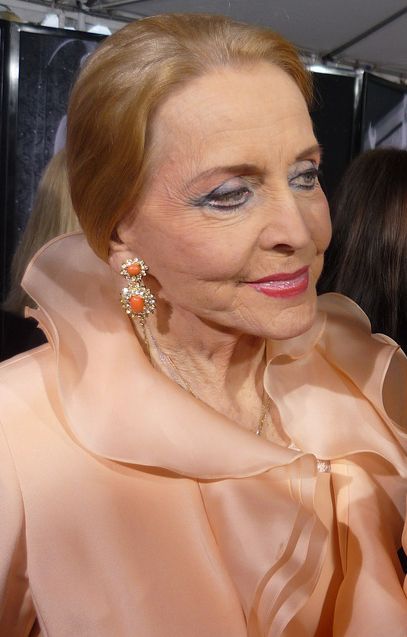
Jamie (John Raitt) is granted three wishes by a fairy queen, and so he asks for travel, for marriage, and for a son who speaks Gaelic (he seems to have wasted two perfectly good wishes because travel and marriage aren’t particularly difficult to achieve). Soon he finds himself in America, and there he meets and falls in love with Maeve (Anne Jeffreys). But at their wedding a jealous suitor (Jeff Morrow) informs Jamie that Maeve is barren, and later when Jamie and Maeve adopt a son, they discover the boy is mute. Although it seems the fates have turned on Jamie, the fairy queen must be looking out for him because a miracle occurs and the boy not only finds his voice, but can also speak the Irish tongue. The critics were divided on the merits of the new musical. Brooks Atkinson in the New York Times said the “elaborate and expensive” production looked good and was well cast but predictably pounced on the evening’s old-hat operetta-like flourishes that dutifully followed the conventions of “solemn, sentimental and unimaginative” patterns. He noted the evening would be perfect for those who enjoyed Magdalena (which had also starred Raitt) and My Romance (which had starred Jeffreys), both major flops that opened in 1948. As for Ralph Blane’s score, it had “more style than content.” Richard Watts in the New York Post found the evening “heavy going” with its “fairly elaborate” plot. He remarked that infertility was not the “happiest” subject for a musical that purported to be a “musical fantasy,” and thought the revelation of the heroine’s barrenness a poor way to bring down the first-act curtain. He also noted the first act “dawdles amid its songs and intermittent comedy,” and then the more serious aspects of the plot were rushed into the final scenes. John McClain in the New York Journal-American felt the musical’s creators offered “dreary” and “highly conventional” material that might have been salvageable had Blane’s score been “great.” While Walter Kerr in the New York Herald Tribune admitted the “amiable spring entertainment” wasn’t the “most memorable” of musicals, it nonetheless had “a nice April look to it.” He praised the décor, especially Miles White’s costumes of “vivid red and yellows,” which set the performers “spinning” in the “Trottin’ to the Fair” sequence. He also liked “Goin’ on a Hayride,” but noted the “Expectant Father” dance was “over-wrought.” As for Blane’s score, it was “pleasant” if “plain” in its “old-fashioned way.” He also noted that despite three choreographers credited in the program, the show was a bit “short” on dances. John Chapman in the Daily News found “pleasure” in the show, but suggested the book needed trimming; he also wished the score had been more “beguiling.” Like Kerr, he applauded “Trottin’ to the Fair,” which was “gay and lusty.” And for what seemed like the hundredth time, Robert Coleman in the Daily Mirror reported the opening night audience “blistered” their palms with applause. He praised the “heart and high spirits” of the musical and liked the “pleasant and persuasive score.” William Hawkins in the New York World-Telegram and Sun liked the “rich, rousing entertainment” and he too singled out “Trottin’ to the Fair,” noting the dance movements were “half equestrian, half square dance” and erupted into “complete joyous breathlessness.” The lack of a hit song coupled with mixed reviews all but doomed the musical, which lasted only three months. But during the run work continued on it, and “Woman’s Work,” which had been dropped during the tryout when it was temporarily the musical’s opening number, was reinstated as “Women’s Work” for the first act (following “The Girl That I Court in My Mind”). The cast album was recorded by Capitol (LP # S-317), and the CD was first issued by Broadway Angel (# ZDM-0777-7-64888-2-0) and then by DRG (# 19086). As mentioned, the critics were delighted with the cast. John Raitt had made his mark as Billy Bigelow in the original production of Carousel (1945), but Magdalena and Three Wishes for Jamie were disappointing failures that lasted about three months apiece. And it got worse: his next musical, Carnival in Flanders, didn’t survive beyond its opening week. But there was one more hit in his future, the long-running smash The Pajama Game in which he introduced “Hey, There,” one of the theatre’s most enduring ballads. After that, he appeared in just one more book musical, the two-week 1966 failure A Joyful Noise. Two old-timers made welcome appearances in the musical. Bert Wheeler, who played a marriage broker, was a stage and film favorite from the past, and his series of madcap and sometimes surreal comedies-with-music with partner Robert Woolsey were fondly remembered. Robert Halliday, who played the father of a girl whom Jamie jilted in Ireland, was the hero in two classic musicals by Sigmund Romberg in the 1920s. He created the role of the Red Shadow in the original 1926 production of The Desert Song (and introduced “One Al
- Music
- Ralph Blane (“special music” by Lee J. Pockriss)
- Book
- Charles O’Neal and Abe Burrows
Productions1 on Broadway
Songs17 songs
The Wake, The Girl That I Court in My Mind, My Home’s a Highway, We’re for Love, My Heart’s Darlin’, Goin’ on a Hayride, Love Has Nothing to Do with Looks, I’ll Sing You a Song, It Must Be Spring, Wedding March, The Army Mule Song, What Do I Know?, Expectant Father, It’s a Wishing World, Trottin’ to the Fair, April Face, Irish
Something wrong here? Correct a field or report the problem. Every change is recorded in public under the contributor licence.